

 ES
ES


In-Cell vs. OLED: What’s the Difference?
03-06-2025 • Tiempo de lectura: 3 min

When choosing a replacement screen for iPhones from model X and up, two screen types are increasingly offered: In-Cell LCD and OLED. That’s no coincidence. Although they're based on completely different display technologies, they’re often presented side by side in practice. Since we at Foneday offer both screen types, we’re here to explain their key differences and similarities clearly
What Is an In-Cell LCD Screen?
An In-Cell screen is a type of LCD (usually IPS LCD) in which the touch layer is integrated into the display itself. This makes the screen thinner and more responsive than older LCD models.
Key features of In-Cell LCD:
- LCD with integrated touch layer
- Good brightness and decent colour reproduction
- Black appears dark grey rather than truly black
- Lower power consumption than older LCDs, but higher than OLEDs
- Affordable price point
- Commonly used as an aftermarket replacement screen
This screen type is often chosen by cost-conscious customers.
What Is an OLED Screen?
OLED stands for Organic Light Emitting Diode. Unlike LCDs, OLED screens don’t require a backlight—each pixel lights up individually. This results in deep blacks, high contrast, and vibrant colours.
Key features of OLED:
- Individually illuminated pixels
- Perfect blacks and higher contrast ratios
- Vivid, bright colour output
- Thin screen profile
- More susceptible to burn-in or damage
- Higher price point
- Typically standard in high-end models (like the iPhone X and newer)
This screen quality is ideal for customers who value high image quality, an original viewing experience, and long-lasting device performance.
🔍 Note: There’s also a distinction between Hard OLED and Soft OLED. We cover that in a separate blog post.
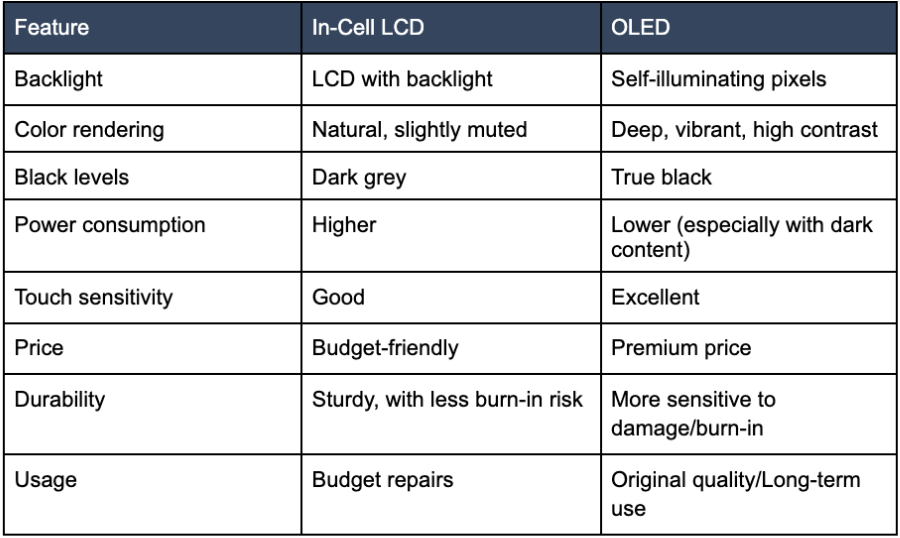
Comparison Table: In-Cell vs. OLED
 incell-vs-oled-en.png 104.64 KB
Why Are In-Cell and OLED Screens Often Compared?
Even though these are two very different display technologies, In-Cell and OLED are often compared in practice. Why?
- They’re used in the same devices
For example, an iPhone X can be repaired using an aftermarket In-Cell screen or a (refurbished) OLED screen, despite the iPhone X originally having an OLED display. - They present a clear choice for the end customer
Customers often weigh price vs. quality. In-Cell is more affordable, while OLED provides the original visual experience. As a repair technician, it’s your role to help guide that decision. - They’re offered side-by-side by suppliers
In the market, both In-Cell and OLED screens are available, often positioned as "Basic" vs "Premium" options. At Foneday, we take it a step further and offer multiple quality levels, so you can always choose the screen that best suits your customer’s needs and the purpose of the repair.
How Can You Explain the Difference to Your Customer?
Here’s a practical way to explain it:
“An In-Cell screen is a cost-effective replacement with decent image quality—great if you plan to use your phone for another year. The OLED screen is like the original: razor-sharp visuals, deep colours, and more responsive touch. Ideal if you use your device heavily or want to keep it longer.”
Clear communication prevents disappointment and builds customer trust.
Our Tip as a Wholesale Partner:
1. Keep both screen types in stock. That way, you can adapt to various customer needs and always offer a fitting solution, regardless of budget.
Check out our range:
- In-Cell quality - aangeboden als FDX kwaliteit
- OLED quality - beschikbaar in zowel Hard OLED als Soft OLED
2. Show the difference. If possible, let your customers see or feel the screens. A quick demo often says more than words.
Got questions about In-Cell or OLED screens? Or need advice on which types to keep in stock for your customer base? Feel free to contact us—we’re happy to help.
Foneday – your partner in quality smartphone repair parts.


