

 ES
ES


Soft OLED vs Hard OLED- Insights into the Two Variants
05-03-2024 • Tiempo de lectura: 3 min

Understanding the distinctive features between Hard and Soft OLED screens is important for professionals in the phone repair industry. These insights undoubtedly impact both repair protocols and the overall functionality of an iPhone device. Armed with this knowledge, you can effectively advise and support your customers.
What are OLED screens, and what are the distinctive aspects?
It's essential to gain a clear understanding of what OLED screens are before delving into the differentiating features between Soft and Hard OLED. OLED, derived from Organic Light Emitting Diode, is an advanced screen technology with distinctive properties compared to other screen technologies. Below is an overview of some of these features:
1. Perfect Black Representation
OLED screens can completely turn off individual pixels, resulting in deeper black tones. Unlike LCD screens where the backlight is constantly on, OLED screens are self-emitting.
2. High Image Quality
Vibrant colors, high brightness, and wide viewing angles define the image quality of OLED screens, making them ideal for viewing multimedia content such as videos, photos, and games.
3. Flexibility
OLED panels can be flexibly shaped, opening up possibilities for curved or even foldable screens, introducing new design options for smartphones with unique form factors.
4. Fast Response Time
OLED screens generally have a faster response time than traditional LCD screens, making them suitable for viewing fast movements, such as gaming, without annoying blurring.
For more information on the features of OLED screens compared to other screen technologies, feel free to read our blog: "OLED vs. LCD".
Differences between Soft OLED and Hard OLED displays
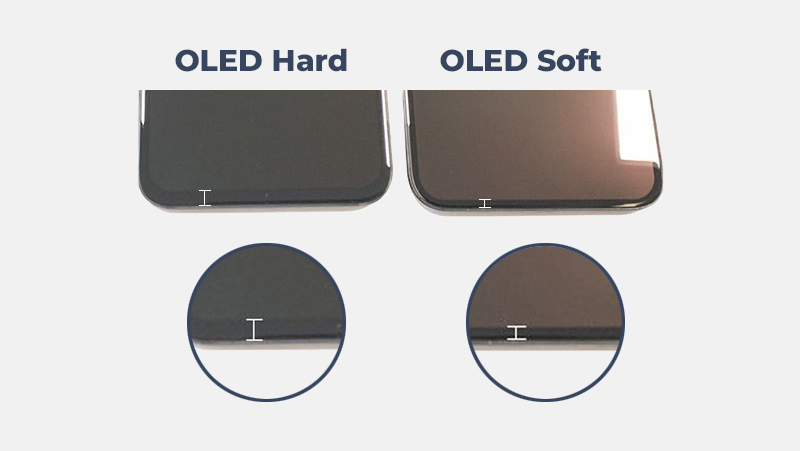
1. Quality
- Hard OLED: Shows sensitivity to physical damage, such as pressure on the screen, which can lead to complications like black screen display or disruptions in image quality.
- Soft OLED: Impact-resistant due to the use of bendable plastic, resulting in a longer lifespan compared to Hard OLED screens.
2. Price
- Hard OLED: Lower prices compared to Soft OLED screens.
- Soft OLED: Prices tend to be higher compared to Hard OLED screens.
3. Material
- Hard OLED: Made of glass, making the screen less flexible.
- Soft OLED: Uses plastic as a material, making the screen flexible.
4. Edge
- Hard OLED: Wider/coarser edges.
- Soft OLED: Thinner/less corase edges.
5. Display Size
- Hard OLED: Slightly smaller display size due to the inability to bend, but the difference is minimal and often barely noticeable to the naked eye, especially in newer phones.
- Soft OLED: Slightly larger display due to flexibility, resulting in a better fit around the phone's casing. Again, the difference is minimal and often imperceptible in newer phones.
Optimal screen choice: Balancing between price and quality
For both Soft and Hard OLED screens, there are various pros and cons. The choice between the two depends heavily on your customers' priorities. If the consumer values affordability over screen quality, a Hard OLED screen is a suitable option. On the other hand, if the consumer prioritizes screen quality and places less importance on price, a Soft OLED screen is the better choice. It's important to ask the customer the right questions to determine which type of screen best meets their needs.
With these insights into the properties and differences between Soft and Hard OLED screens, it should now be significantly easier to provide well-thought-out advice to your customers. Through a thorough understanding of the pros and cons of each screen type, you can effectively guide customers in making an informed choice that aligns with their specific needs and preferences.


